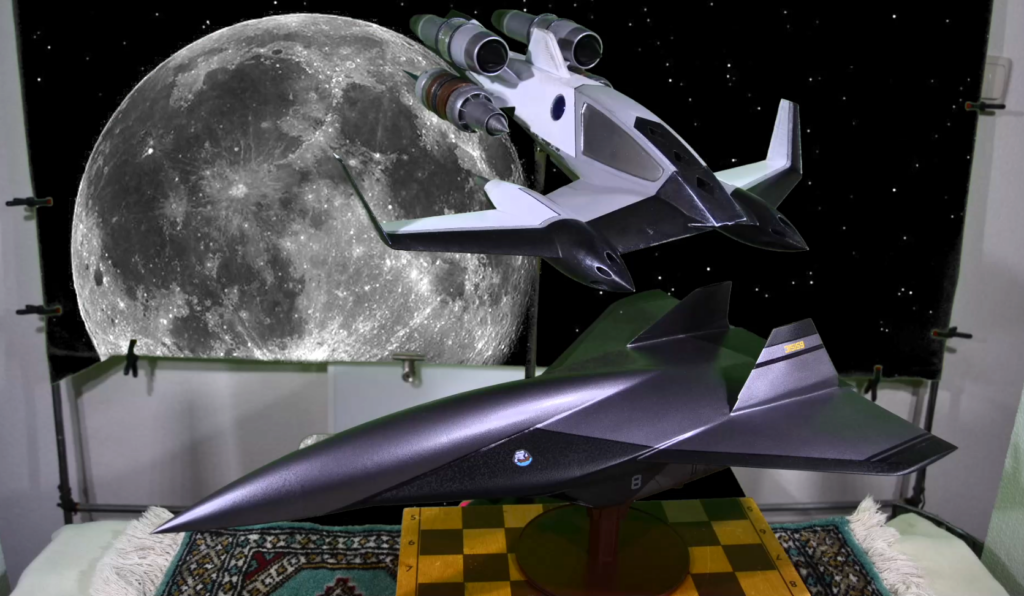
SR72 – Aurora Aircraft concept
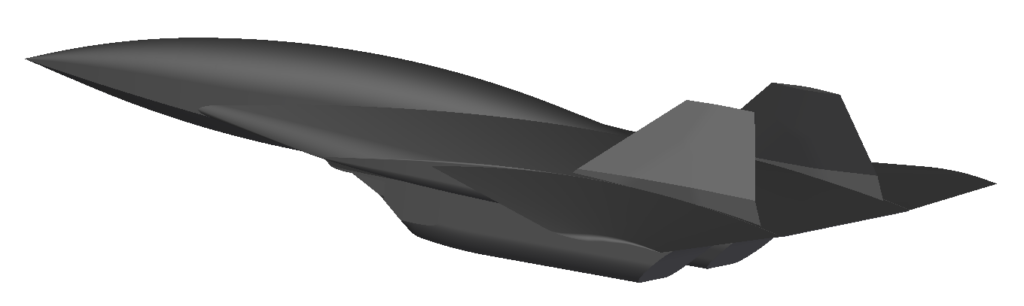
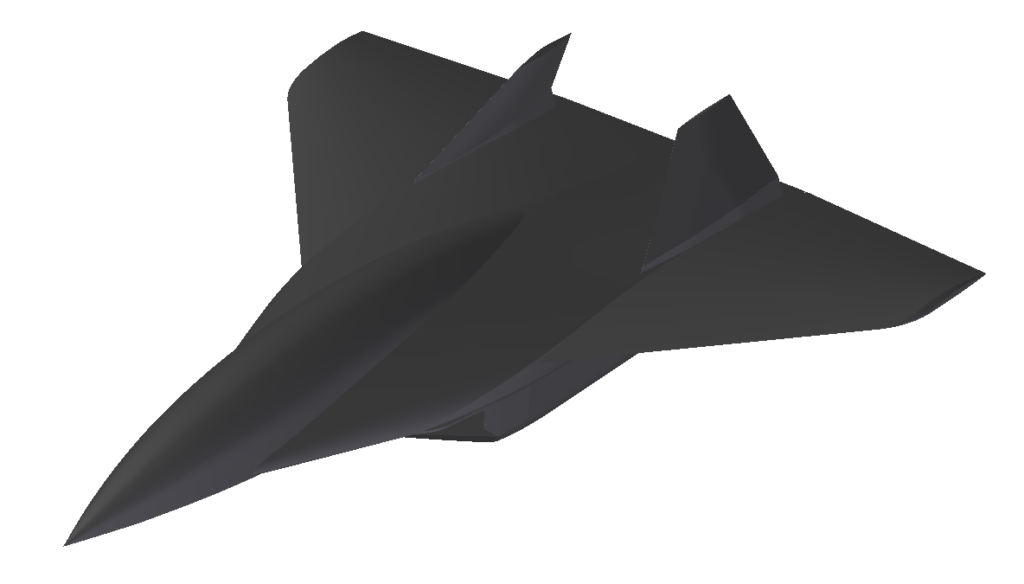
This project began many years ago and the 3D image shown below is the culmination of all my efforts resulting in this particular Aurora – concept. This model has been realised as both a half metre long and a 270 mm long scale model:
Nautilus Submarine concept
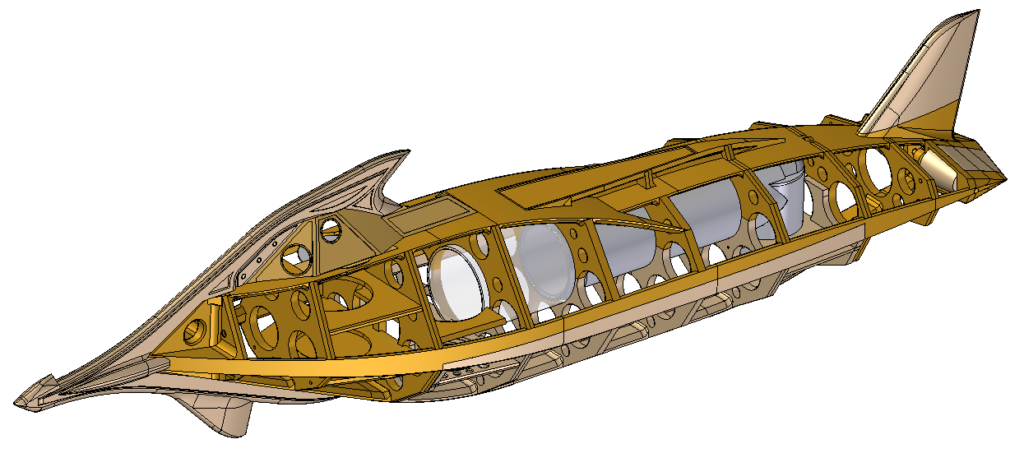
The image shown below is my own rendition of a remotely controlled vehicle loosely modelled on the original Nautilus submarine as depicted in the picture of Walt Disney’s “20 000 Leagues under the Sea”. It features a 3D-printed, modular superstructure (preferably PETG) with the intention to have it Polycarbonate-clad and outfitted with PVC tubing (as the WTC’s). In order to prevent sediment excitement the twin props are situated on the upper side of the stern plating. Pitch control is envisaged by internal mass-displacement (the mass = a set of batteries) in the lowest central WTC compartment.
Other features as relating to the wheelhouse sail which were not present in the 50’s boat are in this model still under development.
High-speed Businessjet concept
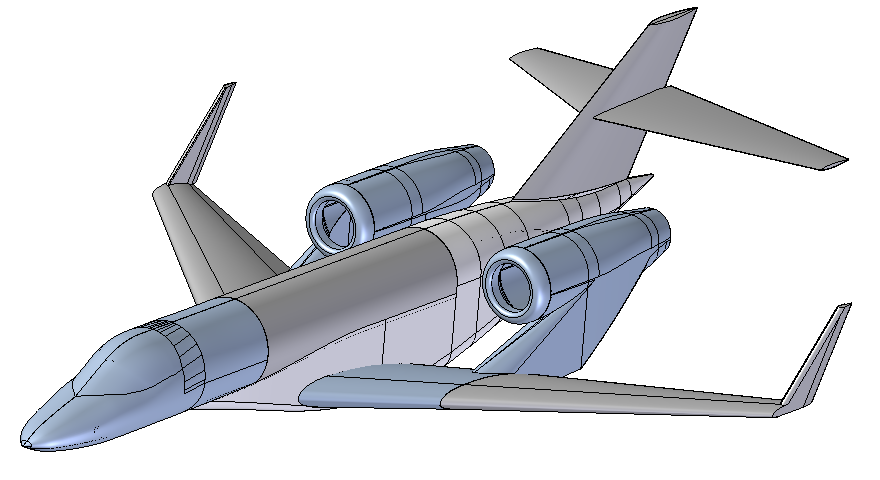
The following project was somewhat inspired by a Cessna business jet, a Falcon 2000 and the Honda Jet regarding the power plant. Aiming to combine desirable features of each individual airframe resulted in the following interpretation of a high-speed, yet fundamentally basic business jet (Supersonic?). That being said, in my opinion the Cessna Citation X will to date be the prettiest bizjet ever designed.
As seen, I modularised the design for easy 3D printing purposes without having to deal with overhangs:
NX1 – Interplanetary Spaceplane concept
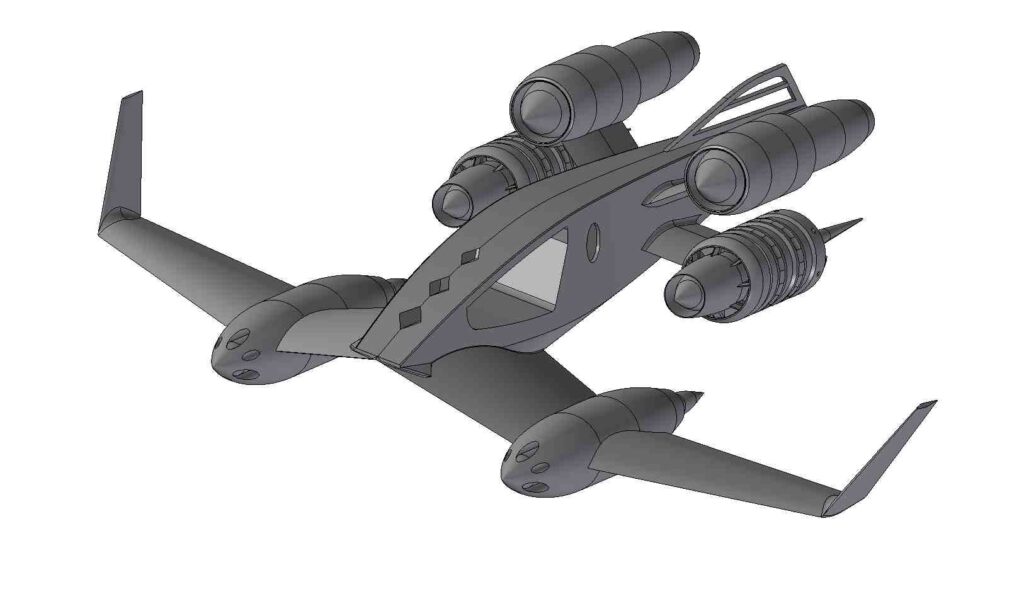
My latest creation is the interpretation of an N1 Naboo starfighter. For this intent I had to think carefully as to how I could make it airworthy in atmosphere, and how it would behave in a gravity-free vacuum (ie. space). The upper set of engines are designed for atmospheric flight, ideally featuring thrust vectoring or even swiveling nozzles for directional control. Their centre of thrust is situated in such a way as to counterbalance the otherwise heavily tail-heavy and forward-placed COP. This concept would never work without a sophisticated on-board flight control system.
For space travel the centre of thrust of the lower (plasma?) engine-pair would be aligned with the COG of the overall machine; with articulating exhaust spikes redirecting the thrust for directional control. This design has veen replicated as a physical model. It took approximately four months to turn this design into a half meter long scale model, inclusive of movable intake spikes for both sets of engines and a stand:
Completed 3D models by December ’23